
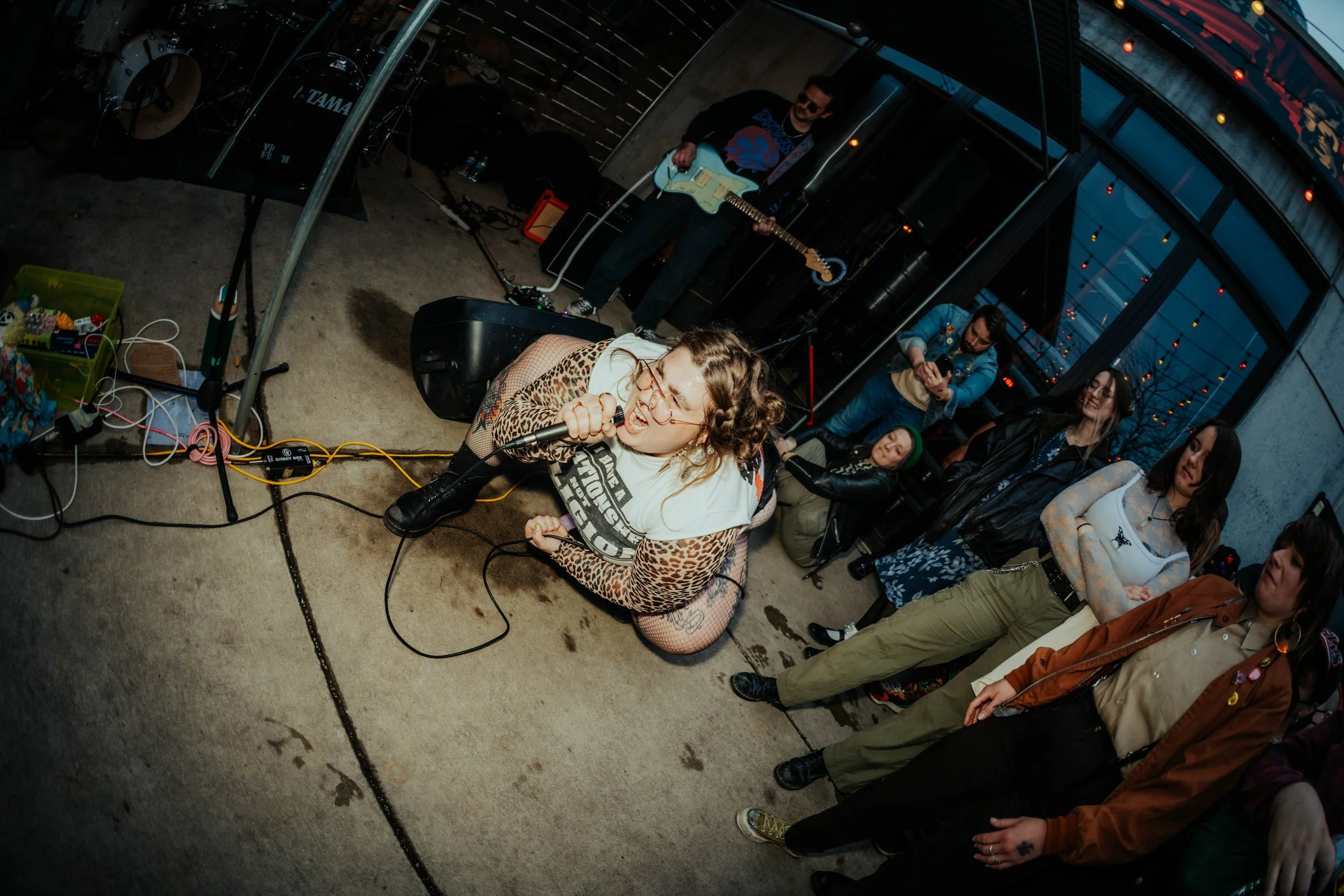
afternoon jibber-jabber with tate
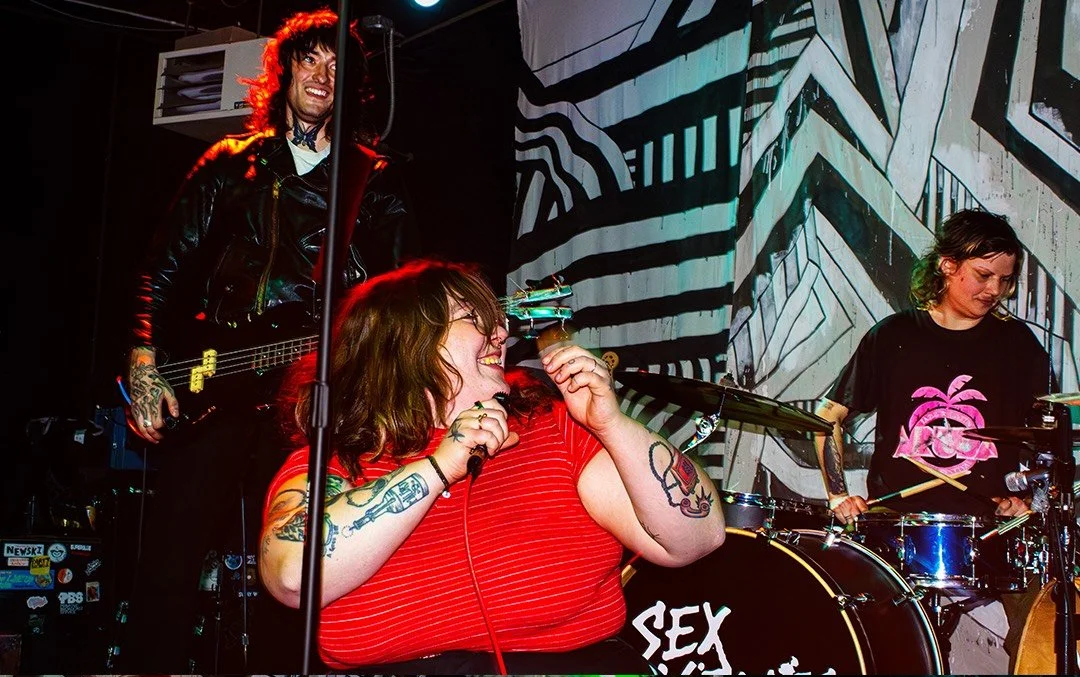
LIVE from the Bottle Top Airbnb: Musician, artist, promoter, and fantastic human, TATE DANGER chats with MATT CIARLEGLIO about sobriety, the new STRAPPED record, and much, much more.
Conversation recorded & transcribed November 20th, 2025
TW/CONTENT WARNING: This interview contains instances of drug and alcohol use, self-harm and suicide.
MATT: You got a show coming up here pretty soon. STRAPPED, January 12th. Y'all have become a staple of the Chicago scene, this year in particular, playing a bunch of shows. The Abi Ooze/Pat And The Pissers show last January was one of my favorite lineups this year.
TATE: We were so stoked to be a part of that.
MATT: There's always good shows going on, but every once in a while there's a grand slam lineup.
TATE: We were very stoked to be a part of that. I'm a big fan of both of those groups. I love an opportunity to connect with people outside of Chicago that have more traction. At that point we had only been playing for a year. Getting their fans to see who we are and making connections for when we go to Indianapolis and stuff like that. It's a great opportunity.
MATT: I listened to the record, it was mastered at Chicago Mastering Services?
TATE: Yeah, Greg [Obis] from STUCK took care of it for us.
MATT: It sounds awesome. It seamlessly blends a lot of genres. It has obvious grunge, some hard rock elements without it being cheesy but at the core, to me, it's straight up Chicago DIY punk.
TATE: It's funny because we get a lot of different groups that hit us up that are like, ‘hey, will you come and play this show’? Somebody asked us to play this… What’s the word that I'm looking for? Oh, goodness. Grindcore! [both laugh] I'll be honest, we're not as hard as we seem. We have all of these pockets of music that we appreciate that we're trying to blend into one space. A lot of people think we're a hardcore band. We're not really hardcore. There's all these different elements to it, but I think that's what makes it fun too. At the root of it, we all just stay true to what we're influenced by and stick to that. It's not a lot of genre hopping, but more so just blending it all into one place.
MATT: I feel like that is such a Chicago thing because that's kind of like what Chicago feels like. It's the melting pot of so many different places. People from all over the country and world live here, and it creates this diverse culture. There's so many bands in Chicago where you got a jazz drummer, a grindcore bass player, a classical violin player or whatever.
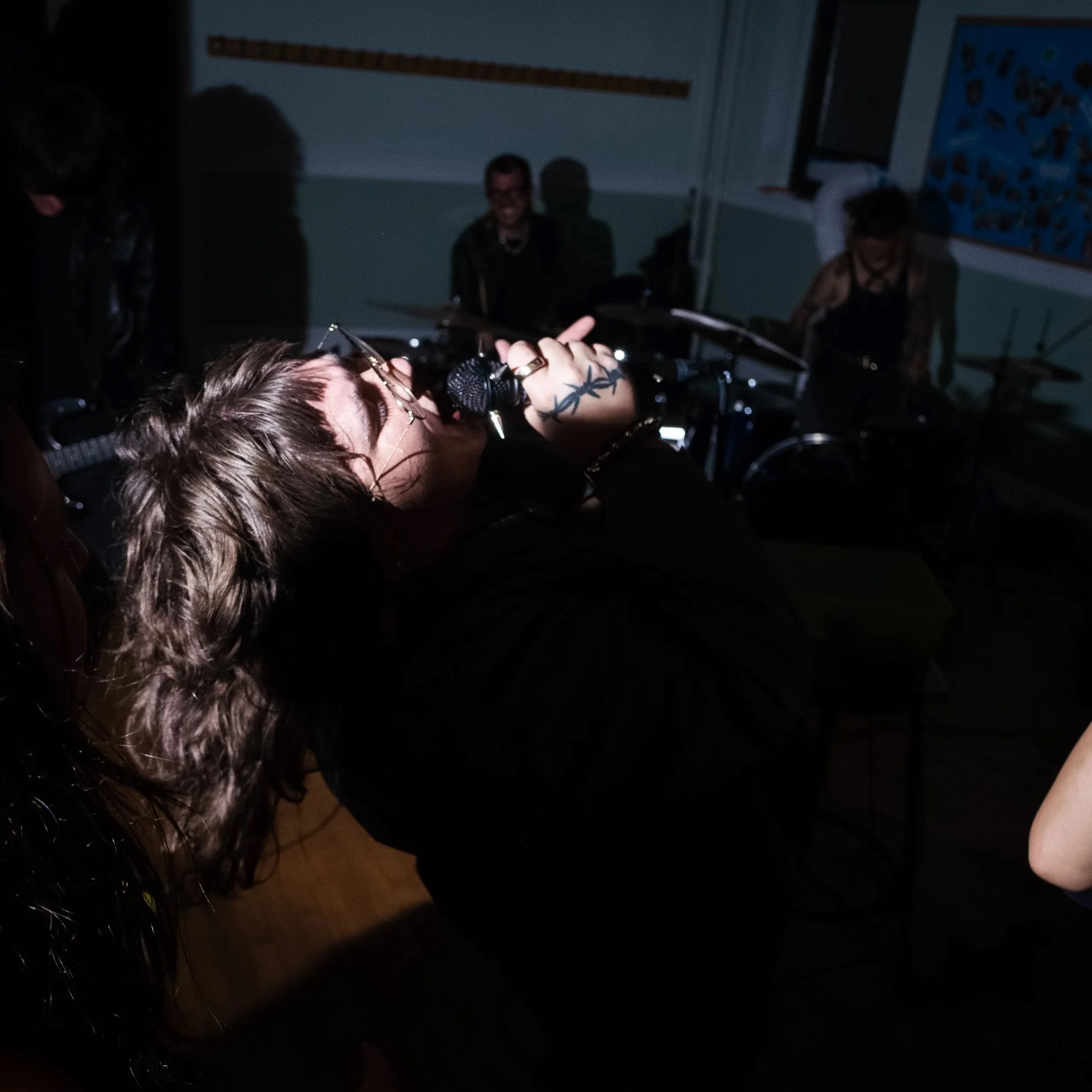
“the thing that I realized in sobriety is not everybody's out to get me. I've been out to get myself for a really long time."
- Tate Danger
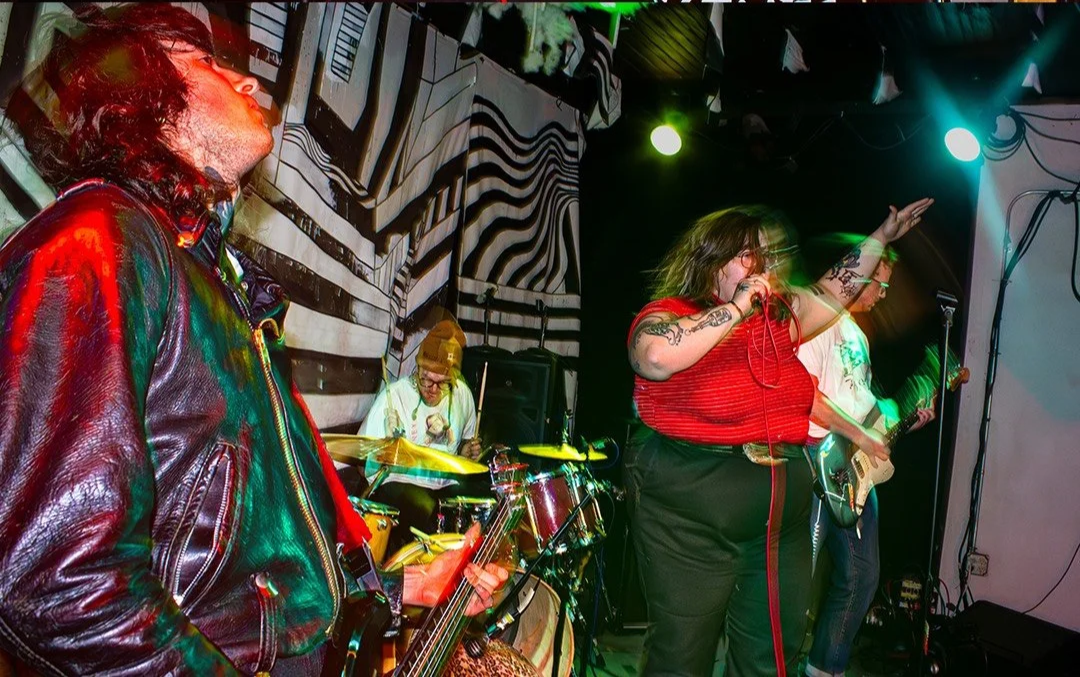
TATE: Absolutely. If anybody's seen us live, we're definitely a band that brings a lot of energy. That's one of my favorite things about live music. You can listen to something on a record and you can appreciate it, but sometimes you see a band and it changes your perspective on their project. This is great in my headphones but seeing it live is an experience. I think that's something that happens with our music and something I'm really grateful to be able to bring to the table. Especially as somebody who's sober. Trying to remember going to shows fucked up all the time, being like, I need to have a spiritual experience at this show. Now, for me, a spiritual experience at a show is seeing somebody rock and give it their all. They're doing it and they love it.
MATT: Yes. So, what's the record called?
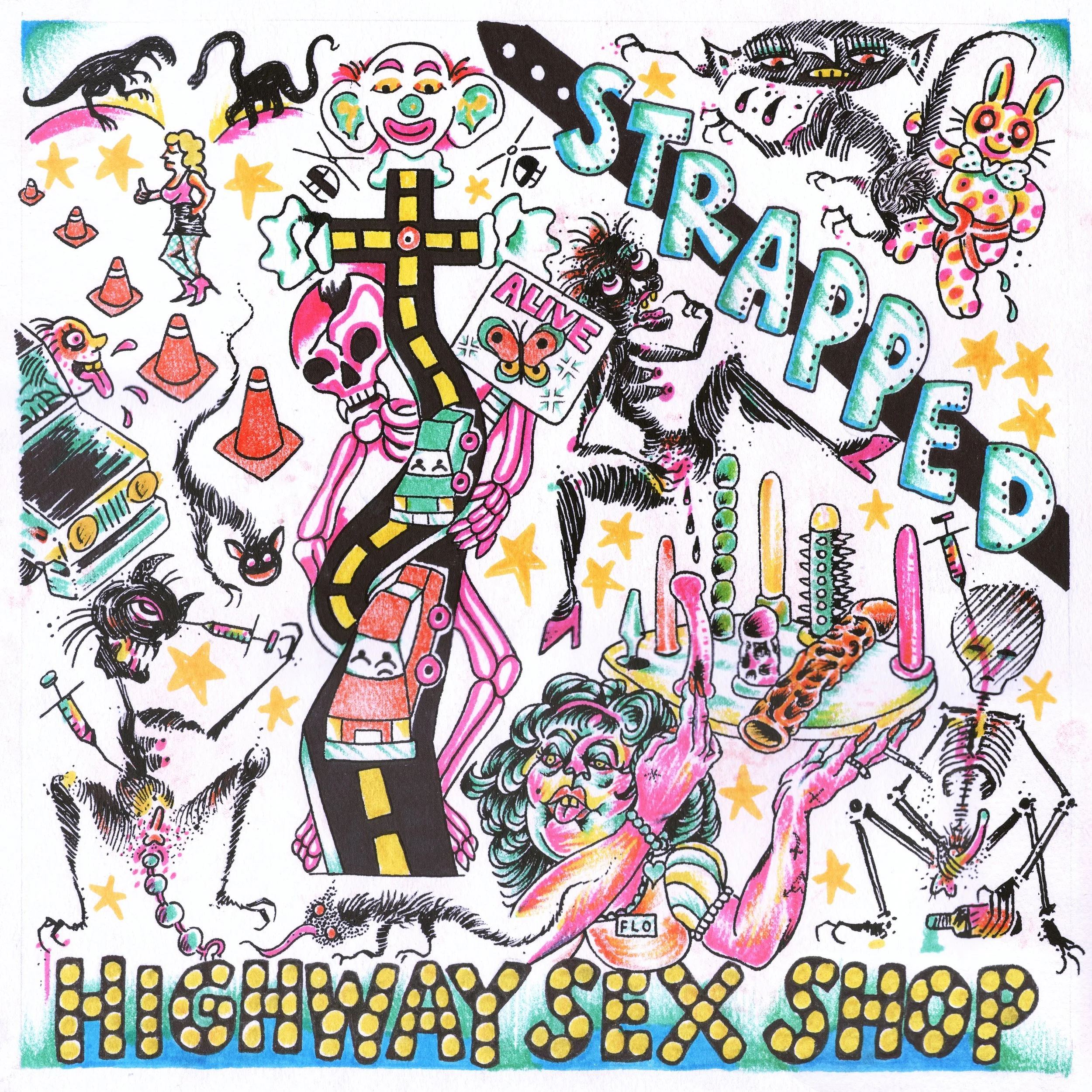
TATE: The record is called Highway Sex Shop.
MATT: That's a great name for a record. The song titles are also great. It reminds me of OOZING WOUND in some ways. There's definitely some grittiness in there but more song titlewise. Pegging God, Popper Etiquette and Tummy Ache? Great song titles.
TATE: It's funny because those are definitely some of my favorite tracks on the record. Pegging God is a homage to me getting sober, in AA specifically, and really struggling with this idea that I'm supposed to believe in a higher power. I was really reluctant to do that. I will say that AA is not a religious program. It is a spiritual program. It's about finding something greater than yourself but I was so unwilling to look at it like that. So, I would write songs like God Please and Pegging God where I'm like, why am I getting on my knees for this dude who's fucking up everything? Like, my life is garbage! Look at all the shit that I've gone through. Why don't you get on your knees, God? What the fuck? You know? So that's what that song is about.
And Popper Etiquette's just a toast to my popper dudes, you know? Which actually falls in with the album title, Highway Sex Shop. I went to see DEATH GRIPS in Grand Rapids, on a bender, and we stopped at the Lion's Den to buy two giant bottles of poppers and we were like Highway Sex Shop. Me and [NAME REDACTED] and [NAME REDACTED] were like, that's a great name for record. I held on to it.
MATT: Wow. That's great. That really adds to it. Are you writing the lyrical content?
TATE: Yeah, for the most part. There is one song that our bassist wrote, Boomer Babe. I love that song. I think that's what's great about STRAPPED. Although we all are assigned our roles, we all contribute to the music in every way. Although we each have our own parts, all of us love music and have ideas. It's a place for all of us, it's a community, building together, it's crucial. I'm grateful we have that. Not every band does. It's definitely like something to hold on to.
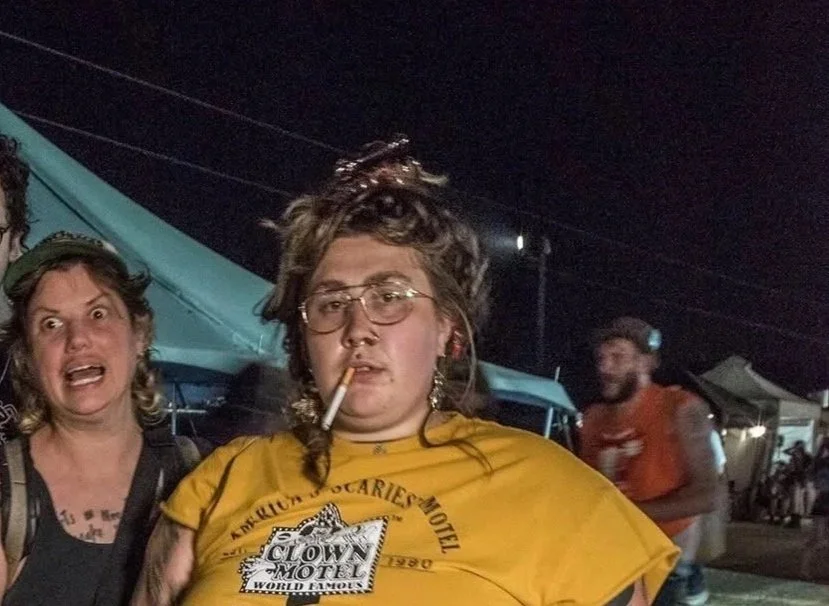
“ …I started to understand that you didn't have to be a big label person to make music. Growing up in a small town, I didn't realize that. ”
- Tate Danger
MATT: That rules. You can hear it on the record. It feels really natural and sounds like everybody's playing what they like to play. It's loose, fluid, and driving. That's a great thing about it is that it's not polished, in a positive way.
TATE: Totally. That's definitely how we all are. All of the music that we enjoy and the things that we get inspiration from all overlap with one another. If one of us disagrees, we're open. We're a really communicative band, which is something to be super grateful for. Communication is something that can drive bands apart. These are people that I hang out with when I'm not at band practice. We hang out all the time. We love each other.
MATT: Outside of STRAPPED and SCRAMBLED PORN, you also host several nights of music across the city, primarily at Cafe Mustache.
TATE: I started doing a monthly series at Cafe Mustache about a year into my sobriety, the first time around. After Situations [defunct DIY venue] had shut down, I connected with so many great musicians, I wanted a place to bring people together that don't get an opportunity to make a lot of money. Making money in bands, especially when you're up and coming, it doesn't really happen. Cafe Mustache has a really great platform for how they pay out bands and their structure. It really reminds me of what DIY is all about. If you're a local band, everyone's getting paid the same way. I don't care how long you've been playing for. I don't care how many likes you've got on your Instagram or whatever record deal you have. If you're traveling and you're on tour, then we're going to adjust, because the people on tour need to be taken care of. The thing that's been really cool about that series is out of the three years that I have been doing it, I have never booked the same act more than once.
MATT: That's awesome. Every time I see one of your series pop up, I'm like, fuck, I gotta go! Really stellar lineups. MELKBELLY, MOONTYPE, and Ed Bornstein's new project with John Carroll.
TATE: It's great being able to collaborate with people like Ed. People that have been institutional in this scene for so long. I've built this space in my community and I'm becoming an institution, right? Everything I've learned and I've done, came from the people before me. I was living at Situations and I got connected with people in OOZING WOUND, like Kyle Reynolds and Kevin Cribben and Zach [Weil] and all these people that really showed me the ropes of what this scene is about. Without those people, I definitely wouldn't be doing what I'm doing. And Darien [Williams]. He's the goat. Truly, that dude is crushing it and he was actually the one that got me in at Cafe Mustache.
MATT: Yeah, he's great. Where are you from?
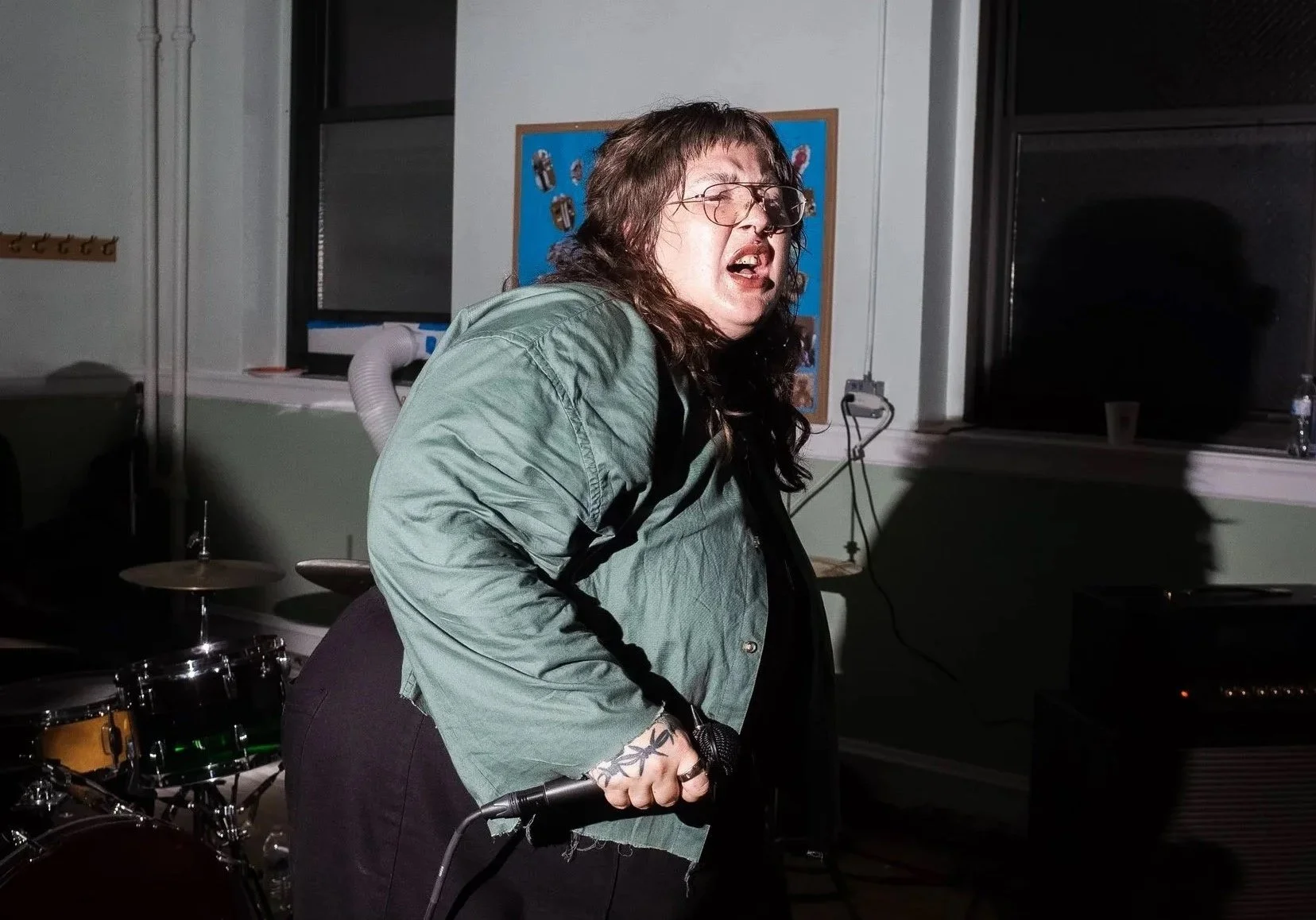
“The perspective shift of sobriety doesn't come right away. It takes a while. Be patient, be kind to yourself.”
-Tate Danger
TATE: I'm from a town of 800 people in this place called Caseville, Michigan. We had 300 kids in our entire K through 12. I graduated with 12 kids in my class. I was really into music, growing up. I will say I did not listen to very good music. [both laugh] I listened to different music than what people did in my area, but I'm a little bit younger. I'm a SLIPKNOT kid. BULLET FOR MY VALLENTINE. I went through a really gross emo phase, screamo, Millionaire's era where it’s poppy, screamo, girl band, a bunch of hodgepodge stuff. I got kind of into alternative music. I was 17 I moved to Chicago. When I moved, about a year after my first year at school… My only year at school [laughs].
MATT: I never went to school. It’s fine. [both laugh]
TATE: When I moved back, when I was 18, I was living with some friends and this pal was lying on the floor. He had this gross, white, beer stained, sweat stained t-shirt and the banana from THE VELVET UNDERGROUND album on his arm. He taught me a lot about THE VELVET UNDERGROUND and THE CRAMPS and I got into that style of music and introduced to a lot of the bands and musicians that have inspired the way that I feel about STRAPPED. I've always loved music. I loved to sing when I was at home. I tried to learn how to play guitar. I grew up playing the clarinet. I was sleeping on my friend's floor for a while and I ran into somebody at Cut Cats. I was a bike messenger at the time and they were like, ‘We need a roommate in Situations.’
I was pretty young when I moved into Situations. I had just turned 22. I fell into that group and I started to understand that you didn't have to be a big label person to make music. Growing up in a small town, I didn't realize that. There were all these different outlets for making music and making music accessible for people like us. I thought it was really intangible but Situations showed me that anyone can do it. They just need a platform to do it on.
MATT: That's so important. Situations is such an important place in the history of DIY Chicago. That place was wild.
TATE: Totally wild.
MATT: Murph [Ryan] and I have both gotten concussions there. [both laugh] So, we've talked a little bit about sobriety but do you want to talk more about your journey with that?
TATE: Totally. So I've been dabbling in sobriety for probably six years at this point.
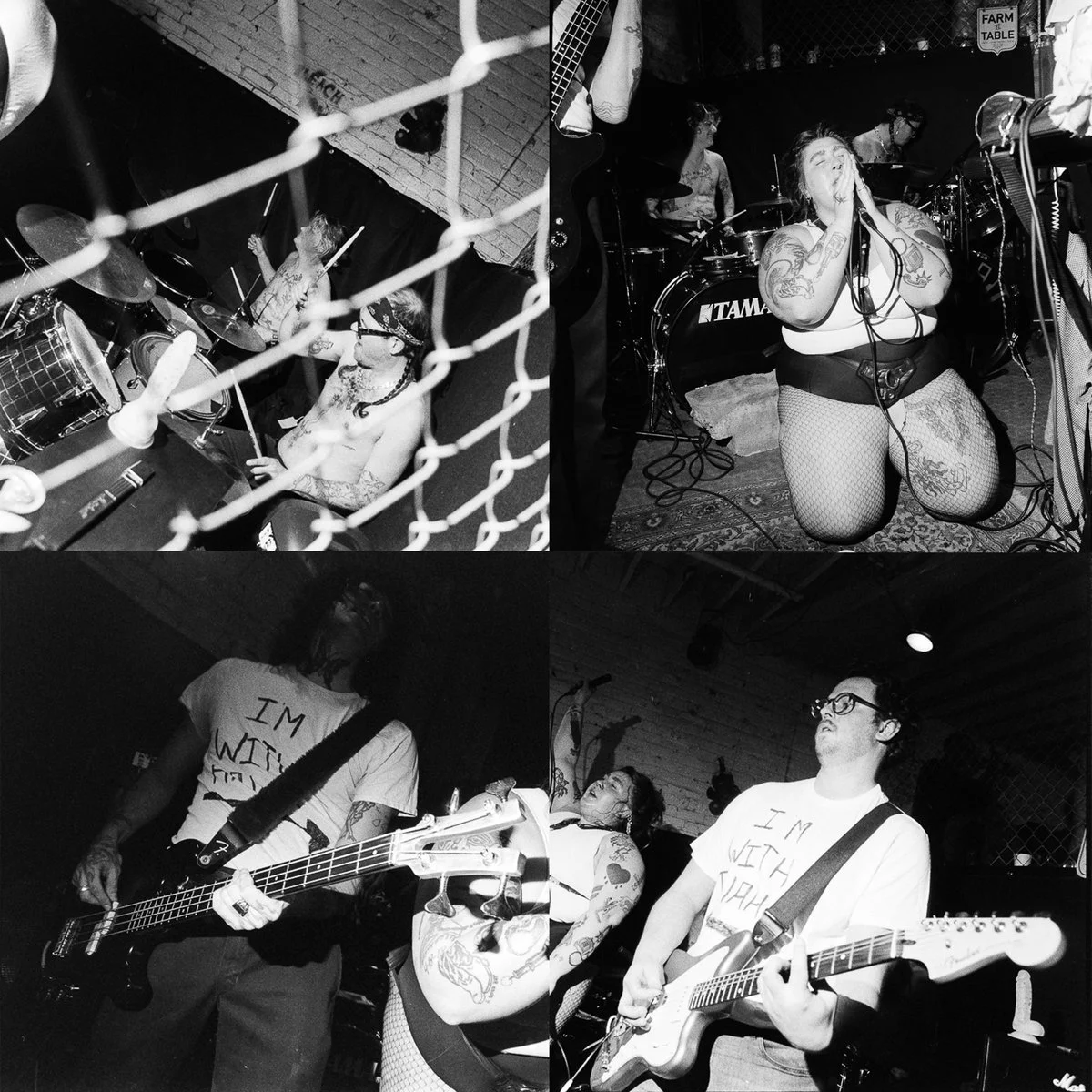
It all started when I was living in Situations. I took a bunch of acid and fell off my bike and cracked my ribs and couldn't work. Somebody was like, “Dude, stop drinking for a little bit. Your ribs will heal.”. Somebody was like, “You do these things when you're drunk and I don't know if you know that.”. That's not true to the character that I feel that I am. How do I hold myself accountable?
If I'm blacking out all the time and not remembering what I'm doing, there's no accountability there. If I stop drinking that'll kind of fix it. Everything will be good. So, I did for close to three years. I didn't drink but I would do anything else I could get my hands on. I can remember what I'm doing on acid and I can remember what I'm doing on mushrooms and cocaine and I'm doing street Adderall, you know, which is literally meth. Mind you, I'm not able to make my own ends meet. I'm doing all these shady things. I did a lot of shit that I wasn't proud of.
I had a relationship with my family and my family loves me very dearly. I was ruining that. I had lost my person in the first month of the pandemic and that really skyrocketed all of my using. I was like, as long as I don't drink, everything's going to be okay. If I didn't drink when Alexa died, I'll be fine. I didn't know how to exist in my own reality. I literally was using psychedelics every single day. There was not a day that I wasn't and there was not a moment where I wasn't stoned. It got really, really bad. I was awake for six days. I went into psychosis and a friend had to admit me to the hospital. When I got out, I was really lucky. I had gone to a few AA meetings beforehand and somebody was like, ‘Maybe you should go back to AA and see if you can get clean.’ . So, I started going to AA and that was great. I was able to create a great fellowship there. I think a lot of us have these ideas about AA and what we think AA is. That's also my experience, you know?
MATT: Yeah, same here. I've tried to do stuff like that before. I talked to a friend about a year and a half ago who is actively still in AA, and that really changed my perspective. I grew up very religious, went through a strong atheist phase and based off that, I was like, I'm not fucking going to AA. I'm not worshiping this bullshit. But they explained it in a way that was really easy for me to understand. It's not about God, The Guy.
TATE: Thee Guy. [both laugh]
MATT: It's nature, or walking. It's whatever you want.
TATE: It's a song. It's the sunlight. It can be anything. There's a lot of younger people, for instance, I tried getting sober at 22. There are people that don't want to hang out with a bunch of old white dudes, you know? That sounds awful. The one thing I will say about Chicago AA is that it is so diverse and so beautiful. There are so many people from all different walks of life and experiences and ages that are in recovery. There is a beautiful fellowship that exists, you just have to be willing to let yourself open up to it. As somebody who deals with a lot of grief, that was my biggest struggle for the longest time. I don't want to let these people in. I don't want to lose any more people. Ultimately, I've relapsed a lot since I started coming around and I'm really grateful that I kept coming back and just kept giving recovery a try. Recovery isn't a linear thing. Some people might get it right away and that's awesome.
MATT: Totally relatable. I had a few interventions in my mid-late 20’s and tried to get sober a couple times thinking, If I can take a break for three months, four months, whatever, I don't have a problem. I'm fine. I'll just stop drinking, but I'll do twice the amount of everything else. It didn't really catch on until several attempts of getting sober and relapsing and then finally admitting that I had a problem and seeking help is when it really stuck. It’s different for everybody. A lot of people don't say it, because it feels taboo, but people relapse. And that’s okay. You can still get help. You don't have to be ashamed of making mistakes. Everybody makes mistakes every day. Obviously don't use that as an excuse, you know? It's a delicate thing.
TATE: Acknowledge that it can happen but don't let it be this thing like, ‘Oh I can just relapse. I can get sober again’. Because the reality is if you truly are an addict, an alcoholic, that really is something that you struggle with, the relapsing, relapsing, relapsing, as an excuse of ‘I can just get sober next time’. That can end you up dead. That's a harsh reality but I have a lot of friends that I have lost to addiction and that's a lot of the reason why I'm here, and sober again. I relapsed after having a year and some change, actively working a program and I did exactly what you said. It took one of the closest friends in my life and somebody I met in recovery to die for me to wake up and realize, this shit is real. It wasn't like this person went out getting high to go die. They took something and it had too much fentanyl in it and they fucking died. That's the reality for anybody. There's fentanyl in everything now.
“..the gifts that I received out of sobriety are the will to live and to be able to look at myself in the mirror. That is something I didn't think I'd ever get back.
-Tate Danger
MATT: For sure. We both have a lot of friends that have passed away from it and it's terrifying. Honestly, I feel so lucky to be alive based on the sheer amount of times that I should have died.
TATE: Totally. At the rate that we were at in our lives, we should not be alive. I'm at this point where I have to look at it as an opportunity to seize my life. With the amount of people that I have lost, maybe this is a similar experience for you, but, I can't live for other people but I can let the love that I've received in my life guide me into choosing the next right action. At this point in my life the next right action is staying sober and building a different life. And different is an aloof thing because I do a lot of the same things that I did in addiction but my perspective on things is much different and my ability to handle situations in my life are very different.
MATT: One hundred percent. I don't know if it's exactly what you're saying, but a year or so after I got sober, I felt like a completely different person but everybody was like, “Matt's here. Whatever.”. I'm doing all the same things, still working, playing music, doing all this shit, but feeling completely different. Most people don't really notice that because you're still you. But it's every fucking step you're taking, every day that I wake up, I'm so thankful to be here. It dictates how I maneuver through life on a daily basis. It might not externally seem different, but internally, it's this totally different world that you're living in. It's great and incredible, but it's something that most people might not see outside.
TATE: Tate before sobriety didn't know how to stop. I had to be doing something at all times. I didn't know how to sit alone. I didn't know how to go to bed without music or a movie on. I didn't know how to be in the car in silence. I didn't know how to hang out by myself. I needed to be with another person at all times otherwise I was going to go batshit crazy. I'm grateful that my life doesn't look like that today. I'm kind of like a half introvert-extrovert, right? I'm somebody that really loves their alone time and really likes more intimate, one-on-one friendships where I'm sitting with somebody and it doesn't feel like I'm sitting in a room with another person. It's very low maintenance. That's kind of like my love language. But I'm also somebody who ultimately really loves their community and wants to give back and show up and check in on the next person.
MATT: I feel the same way, split introvert-extrovert. I forget who was telling me this but, the best way to show up for your people is to show up for yourself. If I don't take a little bit of me-time, I'm not going to be able to be there for my friends and community. If I’m constantly going 100 miles an hour, I’m not recharging. Those are the times I’ve thought, maybe I'll just have a little drink…
TATE: That's so real. The more I stay in tune with myself, the gratitude of having another day and being connected to those feelings and the opportunity to recharge and acknowledge my own needs. It's weird because using, as somebody that’s an addict, it becomes a very selfish thing. It's a lot of acts of fear and selfishness. It's weird because I'm not being selfish now, but to other people it might seem that I am, when really I'm doing what I need to do for me to be a functioning human. Without these things I will be that crazy wild person out on the street, getting fucked up all the time.
Although that might seem like fun to other people, they don't see the consequences of my addiction, behind the scenes. I think that's a big thing for people that are questioning sobriety too, a big thing to remember is not everyone's bottom looks the same. You don't have to lose your house, lose your car, lose your wife, lose your job, to acknowledge that you have a problem. For me, I still had a place to live. I still had a job. I just wanted to kill myself, you know? Everybody's bottom's different.
MATT: I completely agree. Before I got sober, I was like, ‘I haven't hit bottom because I still have a job. I still have a friend group. I still have things, a place to live, a marriage’', whatever. There’s no way I can be at rock bottom because I still have these things. But waking up every day, starting to drink, and every night wanting to die. When you lose yourself. That’s my bottom. But, it looks different for everybody.
TATE: I think it's a very important thing to acknowledge because a lot of people really fixate on those material things. As somebody in sobriety, especially if you do go to AA, some people talk about how they received all these promises. I remember sometimes hearing some people be like, ‘I have this great job now. I love my wife and kids.’. That's really great but that's not what sobriety looks like for everybody. It's important for people to acknowledge that because me, myself, the gifts that I received out of sobriety are the will to live and to be able to look at myself in the mirror. That is something I didn't think I'd ever get back. That's huge for me.
MATT: That’s so great. It makes me want to cry. I love that so much.
TATE: Dude, right? I want that for everyone because I know what it's like to be there! It's so special. I want anyone that's struggling to feel like there is hope. It's tough being in that place to think that there is. Especially people like us. We have these preconceived notions. We're like, fuck this, fuck that. I think it's a part of the energy that the scene has too. Everything that we write about in our music is like, ‘Fuck God, fuck this dude. Fuck The Man.’ All that. And honestly, true to half of that, but I think the thing that I realized in sobriety is not everybody's out to get me. I've been out to get myself for a really long time.
A lot of the situations and hands that I have been dealt are a result of my inability to acknowledge how bad my using was. And that's something that takes a long time to reckon with. It’s not like you're going to stop drinking and realize that, day-one. It takes a long time and it takes a lot of hurt to come to that acknowledgement, but once you do, it is the most rewarding thing that I have experienced in my life, outside of unconditional love. I would say that it is unconditional love but it's unconditional love for myself, which is something I have not experienced up until now.
MATT: That's so fucking great. I could talk about this shit for hours.
TATE: I know. [both laugh]
MATT: I think a lot of people that have gotten sober have similar stories. We both have relapsed before. I'm finally in a spot where I know I'm doing the right thing and I know how bad it would be if I fell off. That's a helpful reminder for me every day. I have my own sort of little rituals that keep me on track.
TATE: Being somebody who has relapsed a lot, I have a fear of what people are going to think of me. Fear runs my life. Every single aspect of it. Fear is what led me to drinking. It’s led me into a lot of other situations that I haven't enjoyed. Whether that's depression, dealing with grief, the way I manage my relationships, whatever. I’ve had to come to terms with how bad it is. If I give sobriety a shot, is it going to get any fucking worse? Chances are if you give it an earnest try, it will get better. Have patience. Getting sober isn't something that is like a light switch. You don't turn it on and life is a beaming light and everything's great.
MATT: I white-knuckled it for a solid year and a half. It still sucks. Some days are really bad, but way better than if I was using.
“I didn't know how to exist in my own reality.”
-Tate Danger
TATE: That's important to remember. When I got sober I thought that everything that had happened in my life was going to get better. Bad things were going to stop happening to me. That is not reality. We are all human and life doesn't stop. The bad things that happen to us aren’t always our fault. We're going to experience grief. We're going to experience love. We're going to experience breakups. Money issues, political climate, all this shit that is honestly out of our control. All these bad things didn't stop happening, right? But I have learned how to manage my life in a way where I don't have to get fucked up because my best friend died. I don't have to get drunk because I had a bad day at work or someone is sick and I'm struggling to deal with it.
I can talk to somebody. I can open up to my community. There's a lot of things in our life that are out of our control and acknowledging that I'm not in control of that is big. You don't have to believe that it's God that's in control but you have to acknowledge that you can't do anything about it. I spent so much time being pissed off at people because I thought that I could control it or that they could control it. Why am I going to sit here and be pissed off? I don't need this negative energy in my life. It really is a big perspective shift. The perspective shift of sobriety doesn't come right away. It takes a while. Be patient, be kind to yourself. You might not work in a place where you can be honest about your recovery or you might not feel like you can open up to your family, but confide in someone and have them help you be held accountable. Slip-ups happen and opening up about that accountability doesn't mean that you're subjective to not having a relapse but it is important. I do encourage people to seek help in recovery through other people because the thing I have realized is it's not something that I can do by myself, which is something I thought I could do for a really long time.
Once I realized that recovery is about connection and honesty and self-improvement, that really changed the whole game for me. I encourage anybody that might be struggling with sobriety, if you do want to tap into it, just be patient. Open up, be honest, and try to connect.
MATT: Totally agree. Definitely couldn't have done it alone. With that being said, do you have any other resources or anything that you would recommend?
TATE: AA has been the thing that has helped me. I'm not here to promote AA. I'm here to promote sobriety. I'm here to be an example of what my life looks like. I'm here to help people that want to seek help. If you have access to therapy, seek therapy and be honest about your struggles with addiction. Find somebody in your inner circle that might not be sober or somebody who is sober and try to connect with them and do sober activities with them. Finding things to do that you can enjoy sober is so important because when I first started on this journey, I was like, I'm never going to have fun anymore. I'm going to hate everything. I'm never going to be able to talk to people. My life is going to suck. That attitude is what put me back out for so long because I couldn't acknowledge that you could actually have a really sick fucking life in sobriety. I have gone to shows sober that have been way more mind blowing than anything I experienced on drugs.
MATT: Out of everything I've ever done, substance wise, nothing beats just being alive and sober. Because it is trippy as fuck.
TATE: It's so trippy.
MATT: It is so crazy to just walk through the world and be like, how is this possible?!
TATE: I think it sounds corny to somebody who might not have had that experience, right? Or somebody that's afraid that they won't get that experience, especially if they do get sober. I promise every experience that I tried to seek in active addiction, I never got what I wanted. I never reached that place that I wanted to be. Don't get me wrong, there were times where I had fun. But I kept doing it for so long, it got really, really dark. I don't want to live in a dark place anymore. We live in a world that's pretty fucking miserable and I don't want to be miserable on my own accord. I can acknowledge how fucked up everything in the world is right now, but I can also acknowledge that in my interlife, there are places of gratitude. Not everything is burning down. I used to self-castrophize. If I really look at it, my life isn't that bad. I have people that love me, I'm sober, I've got a job, I can brush my teeth in the morning and clean my sheets relatively often. It's small things.
MATT: But even the big things, the political climate of the world being so fucked. To be sober through it helps me. How can I help the community that I interact with every day? I might not be able to fly to DC and protest, but what can I do in my community to help ease some of this awful shit that’s happening.
TATE: If I weren't sober, I wouldn't be able to show up for my community. When you're doing something like protesting or fundraising, things that are affecting our community, mutual aid, you deserve to be able to feel the impact that you're making because that shit is huge and should not be taken for granted. My sobriety date is November 4th. I literally got sober the day before the election and holy fuck am I glad that I'm sober right now because the fact that I'm a nonbinary person, although I pass as a woman, I'm seen that way by a lot of people. In reality, people like me and a lot of my peers, their safety is at risk. Things are dark and Tate would get fucked up over this or kill themselves. But today I get to show up for the people that are struggling. And that's a gift. That's my part in it, you know? Everyone deserves an opportunity to feel something like that.
MATT: That's beautiful. I'm really proud of you.
TATE: Thank you. I'm proud of you too, dude. I think that's what's important about this too, is we can be a staple in the room for somebody that's struggling. If you see one of us and you're at a show or an event and you're having a tough time I can guarantee you either one of us are more than happy to either step aside, talk, get an N/A beverage with you, or connect at another time.
MATT: Absolutely. When I first got sober, those moments when I was having a hard time and someone took two minutes to talk to me, changed the course of my life. I'm happy to do that because I know that sometimes all it takes is two seconds to be like, hey, are you okay?
TATE: Those acts of kindness are crucial. One thing I will say, to kind of pull back to sobriety and STRAPPED together, was living at Situations. I wanted to make music, you know? I had no motivation to actually do anything that I said I wanted to do. I was somebody that did not create in addiction. I didn't start making music until I got sober. Some people are afraid to get sober because they're afraid they won't be able to make music or maybe I won't get to be in a band if I get sober. That hasn't been my experience. Getting sober has given me a much different perspective on music and the way that music is in general, the way that I perceive it and the way that I write it and the way that it cultivates space for people. If you're questioning sobriety, you're fearful of it, give it a freaking shot. Just run with it. There are so many people in this scene that you might not even know, that are people you can talk to. That's what I'm also really excited about with this show that I've got coming up. I have a lot of people on this bill that are sober people and are people that would be more than happy to be resources, especially if you're trying to make music because sobriety can feel isolating, but it's really not. It's the complete opposite. I hope that people who are curious about it get to know that experience.
‘HIGHWAY SEX SHOP’
Self Released, TBA 2026. Cover art by Decorators Tattoo: Ed Rivera, Clayton Bond, & Shannon Hull.