
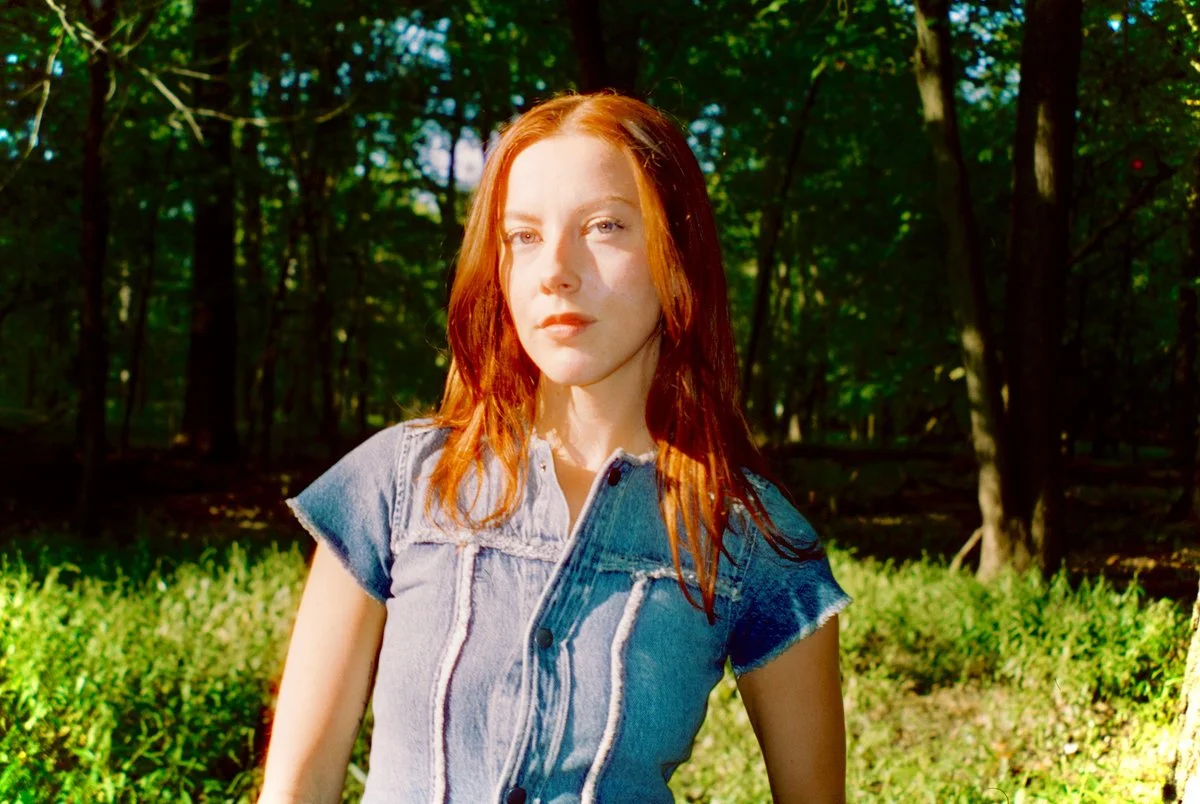
coffee & tea with josephine
JOSEPHINE LUHMAN and MATT CIARLEGLIO casually converse LIVE from the sun drenched Empty Bottle office on a chilly February afternoon.
Conversation recorded & transcribed February 12th, 2026
MATT CIARLEGLIO: How's it going?
JOSEPHINE LUHMAN: It's going good. I went to hot yoga this morning.
MATT: Oh, shit.
JOSEPHINE: It was really nice.
MATT: Is that a newer thing or have you always been a yoga person?
JOSEPHINE: It's kind of always been in my life. Working out has always been a part of my life, but hot yoga is just…I need it in the winter. I'm always so cold. My apartment is so cold that getting to sweat feels so nice.
MATT: I feel very dried out this Winter.
JOSEPHINE: I feel nice today. I’ve got a day off, too.
MATT: What do you have for breakfast?
JOSEPHINE: I'm a huge breakfast person. I'm hungry the minute I open my eyes. I am starving. I need to eat immediately. Lately my breakfast has been oatmeal with honey and cinnamon. Since winter, a lot of toast with butter. Toast with butter, oatmeal, and tea.
MATT: You're from Minnesota?
JOSEPHINE: Yeah.
MATT: When did you move to Chicago?
JOSEPHINE: I moved here almost 10 years ago. I moved here when I was 18. I was coming to school. I came for school at Columbia, the art school, for a year and a half after high school.
MATT: What made you choose Chicago?
JOSEPHINE: I love a city. We came here as a family, we visited Chicago a lot throughout my childhood. I always knew Chicago and I always had a lot of nostalgia for Chicago. My mom said that I expressed wanting to live in a city. When I toured colleges, I went to Madison and Milwaukee, I went to tour Loyola and DePaul as well, but that just didn't feel like a city. So when I toured in the South Loop at Columbia, I was like, ‘This is the city.’ I'm not even worrying about all the debt that I'll come into by choosing this one, but it was the most exciting… [both laugh]
“Your life does change, but it changes in all the best ways. and ultimately, everything gets better."
- Josephine Lehman
MATT: I think that's understandable. My siblings had lived out here before I moved here, so I kind of got a sense for it. I don't know if this is your experience as well, visiting Chicago, but you're like, ‘Oh, everyone's downtown all the time.. That's where I will also spend time because that's Chicago.’ But I rarely go downtown. [both laugh]
JOSEPHINE: No. I know.
MATT: But now when I do, it's fun because it makes me remember that I live in this major, beautiful, city. It still feels romantic and cool, but I'm also very thankful that I don't have to be downtown that often.
JOSEPHINE: Exactly! I was experiencing that a couple days ago. I went to the Shed Aquarium for one of the free days that they had. Being downtown and walking by the lake, you just feel like, oh my God, I live here! It's awesome.
MATT: So, how did you start playing music?
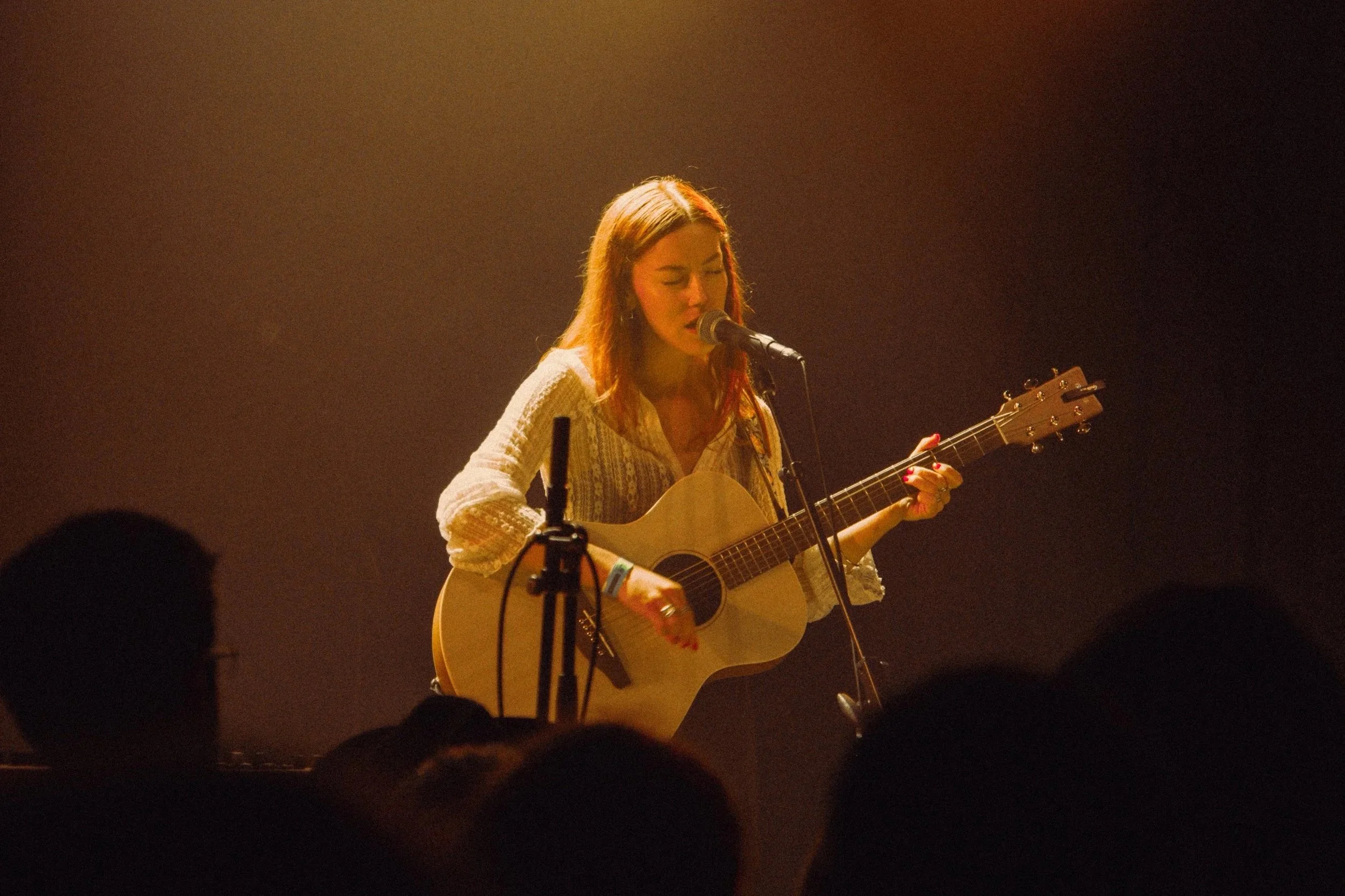
JOSEPHINE: I learned guitar at like 14. I was always singing. I did a lot of theater and musical theater growing up. I was always making it somehow, but I don't think I started really pursuing music and performing until Chicago. I didn't perform or try to find shows until maybe my second year of Chicago and then I started playing, or trying to. I would play anywhere. I’d play any gig.
MATT: What spurred you to pick up guitar?
JOSEPHINE: As a kid, you're drawn to instruments. I was very drawn to the piano and so I learned that a little bit. But the guitar itself, I was enamored by it. I always wanted to learn so bad. It was some instinctual thing where I needed to do it. I needed to do it. I needed to also find something that I could sing with. I had a keyboard and the keyboard was fun, but I wanted a grand piano sound to sing with, and the keyboard would never give me that.
MATT: Hard to fit a grand piano in a house.
JOSEPHINE: Yeah, but a guitar… So I had gotten an acoustic and then I taught myself through YouTube and stuff like that and then learned the basic chords, which then I could cover songs and write my own too.
MATT: Everybody's got their own sort of tale. It's fascinating thinking back because after years of playing, I kind of forget sometimes like, wait, why am I doing this? Other than enjoying it. Do you need a reason other than enjoyment?
JOSEPHINE: Yeah.
MATT: It's kind of interesting, questioning why did we start doing this or that? I was a pretty quiet kid, being the youngest. My older siblings were shouting about whatever the fuck they were shouting about [both laugh]. And so, for me, I didn't really feel like I had a voice so I found it by picking up an instrument. It kind of made people listen, which was interesting. Are you the oldest?
“… I had been going back and forth thinking that I'm too early in my career to put out a full length album. And then I'm reminded that there are no rules.”
- Josephine Lehman
JOSEPHINE: No, I'm middle. Kind of similar in the sense that like, I guess that the trope of the middle child not being heard or whatever… I could see that as being the youngest, you're at the bottom. ‘You're last’ kind of thing. I was very private. I was fine being alone and I had a huge imagination so that alone-time was great. I wanted that to myself. Music was a way of also being heard without being like, ‘Hey, listen to me.’ I'm not going to ask you to, but if I play, then maybe you will listen. Not that I wasn't being heard, but I didn't want to outwardly verbalize it.
MATT: I picked up the guitar when I was 11 or 12, I think, and I didn't even really know what I wanted to say, but I wanted to talk. Express myself. I don't know, what does a 12 year old have to talk about?
JOSEPHINE: Boys? [both laugh]
MATT: Your first show at the Bottle was January 21st, 2024. Right?
JOSEPHINE: Ooh, I think so!?
MATT: It was with The Part Timers and The Spine Stealers.
JOSEPHINE: Yes! Oh my God. I was so excited.
MATT: Really?
JOSEPHINE: Yeah. Empty Bottle is iconic. It's on the top of the list of venues you want to play as a musician that hasn't played a lot of venues yet, you know? It's the best. I love it.
MATT: Me too. Since then [2024], it's been cool to see you perform here several more times, as well as Do Division last year. I remember thinking at that show, ‘Damn, this has gotten really, really good.’
JOSEPHINE: Thank you.
MATT: It has been cool to see that progression over the course of a year. Going back to 2023 and listening to some of your older songs, they're great, but the ones that you just put out, like Does It Pay?
JOSEPHINE: Yeah! Does It Pay.
“Maybe it's not better or worse, but it's definitely where I need to be. I want to be here. I want to be present.
”
-Josephine Lehman
MATT: Sonically, like, it's still your music and you very much carry your own sound, but it's just so cool to hear how much bigger and more confident it has gotten in just a three three-year period of time.
JOSEPHINE: Thank you. That's so nice. It's really, really nice to hear.
MATT: I kept noticing this one person in the credits who helped produce or record. Alex Burns was it? Who is that?
JOSEPHINE: Alex Burns helped me with all of my music that's out right now. He co-produced. He works at Palisade Studio. Sadly, they're closing down, but he's going to come work in our practice space, I believe. He's an insane engineer. He's so good and smart with recording. I met him years ago at CRC from a friend of a friend and we would somehow get free studio time. I don't know if that was known or anything, but like, we would just go in there and make stuff. He's great. He might record vocals on this next project.
MATT: That being your next record?
JOSEPHINE: Yes.
MATT: There's so much cool layering going on, especially in the newer 2025 songs that you recently put out. Maybe it’s cliche to say, but the guitars sound really good. [both laugh]. Very nuanced. It's polished and has attitude, but it's not snotty.
JOSEPHINE: Kyle Maurisak is also involved in that too. For Machine and Does It Pay, he is kind of co-producer on those two. He is an amazing guitar guy, with tones and stuff like that. He has a really good ear for that.
MATT: So, this will be your first full- length record?
JOSEPHINE: Yeah.
MATT: Are you scared?
JOSEPHINE: Yeah.
MATT: Do you have it all written out yet?
JOSEPHINE: Yeah.
MATT: So, you're just recording?
JOSEPHINE: Yeah. Just recording now. It started off as an EP because I had been going back and forth thinking that I'm too early in my career to put out a full length album. And then I'm reminded that there are no rules.
MATT: So true.
JOSEPHINE: No one is knocking down my door for an album either, but it doesn't matter. I have the songs, so why not create it? I am scared, though. It's huge compared to an EP. But yeah, it started as a four song EP and we recorded four songs at Emma's Cabin. Do you know Emma McCall?
MATT: I think so. I'm really bad with names.
JOSEPHINE: I think you’d recognize each other. We recorded at her cabin. I wanted my next project to be very DIY and out of a studio for money reasons and I like that sound, you know? You can get the same feelings from music, whether it's recorded super professional or not. We recorded four songs and then kept writing a little bit, then I had more songs that I was demoing and bringing to the band then I had enough for an album.
MATT: Do you know what the album is going to be called, or is it a secret?
JOSEPHINE: I have no idea. [both laugh]
MATT: Okay.
JOSEPHINE: We're jokingly calling it ‘Joe Shine’ right now because when I was making the CDs for this last show, I had accidentally written ‘Josephine’ and it looked like Joe Shine. I wrote the E over the S or something like that. It actually looked like Jose Shine. It turned into Joe Shine.
MATT: I like the intro to Machine. ‘Sometimes I feel so far away from myself, I can't get close to her.’ That's very interesting. What’s that about?
JOSEPHINE: That song is about insecurity. It’s something that I've always dealt with, since I was young. Being so insecure, caring about what other people think and how I'm being perceived, which ultimately pushes yourself away from yourself because you're just seeing yourself. You're always looking at yourself outwardly because of how much you care about what others are seeing. I think that line comes from being distant. I was like,’Okay, I know I'm insecure. How do I get over this’ This song is like, ‘Build me like a Machine.’ Give me what I need to be okay or be complete or the whole of myself. I wrote that a couple of years ago now.
MATT: When you talk about or write about being perceived and insecure, does it ever affect your writing? Being a musician and a songwriter that releases music and is on stage, someone who is perceived, does that ever mess with your brain?
JOSEPHINE: A part of the reason I do like to perform, and I've always liked to perform and be on stage, is because I like to be perceived. You know? It's weird. I think that insecurity is such a ‘self’ thing that it's kind of contradicting in a way. If I think too hard about how a song's gonna be taken, I try to avoid that. Because it’s none of my business after I've written the song and I've dealt with whatever I need to deal with through the song. It's kind of healed itself in a way. How other people see it is not my problem. Maybe this is just me speaking now because I feel more solid in myself than I did a few years ago. I think that's really important.
MATT: Does a lot of songwriting come from a place of exercising what you're experiencing?
JOSEPHINE: I think that's really all that it is and has been for a while. A way to express myself to myself, but through the channel of music. Then I can just let it be, you know? A lot of time by the end of the song or even just time passing, it's resolved itself. You also learn a lot about whatever conflict you're dealing with within yourself through that writing. A lyric comes up and you're like, ‘Oh my God, yeah, that's totally how I feel.’. It's all just very personal. It's funny because when I wrote that song [Machine], I was feeling insecure but it's something that I’m sharing with the world.
MATT: I think that's what makes it so relatable. It feels like it's coming from a very honest place. You want to talk about sobriety a little bit?
JOSEPHINE: Yeah, I'd love to. I love talking about it.
MATT: Hell yeah. Me too. So, you just hit the two year mark?
JOSEPHINE: Yeah!
MATT: Congratulations!
JOSEPHINE: Thank you. Sober to me is no alcohol. I don't really do weed. It makes me feel insane. I used to be able to do it and have it be so fun when I was younger, but weed is my enemy. It's horrible. It's terrifying.
MATT: It is terrifying. I used to get so scared.
JOSEPHINE: I get so scared. Every four months I'll try it again because I hope that maybe by the Grace of God I can enjoy a little substance of something and have some escapism from the world and watch a little movie. But it could be the nicest, chillest movie ever but if I'm high, I'm like, ‘Oh my fucking God I'm a monster.’ Can't I just enjoy this? [both laugh]
MATT: I tried to get sober several times before it stuck, primarily from alcohol because it was a catalyst. I'd be like, ‘I'll try to smoke weed instead of drinking alcohol.’ And I would get so freaked out. I would wrap myself in a blanket and be scared I was having a heart attack and that the whole world hates me or whatever, you know? All this is happening while I'm watching the Lion King.
“It can be a scary realization; when you don't want to feel bad anymore, but you don't want to stop either.”
- Josephine Lehman
JOSEPHINE: Exactly. It's just horrible. Does not work for me anymore.
MATT: So how did your journey start?
JOSEPHINE: I was drinking since it was accessible, I was 16 or 17 and then coming to Chicago was absolute freedom. I could drink all the time. I fell in love with it, and it was just so fun. Alcohol, the way I was raised, was never deemed bad. It was all around and it was, even though alcoholism runs in my family, I was never taught how terrible it was. And that's not my parents. They had their own relationship with it, but I don't blame them at all for that. I was drinking for way too long and my tolerance had always been really high. I was always able to drink a lot and for a long time.
I wanted to keep doing that even if I had woken up and was hung over. I can keep going. So the reason why I got sober was a few years ago, it felt like it wasn't fun anymore, and it was also making my life so gray and so depressing and I couldn't move forward with a lot of things.
I was in a relationship with an alcoholic as well. I had gotten into that relationship when I was 23 or something, and it lasted for two years. When I look back on it, alcohol was the main component of our relationship, and it was not a good relationship. It was unhealthy in a lot of ways. Getting out of that relationship and then having a year of absolute spiral, you go through a breakup and I hadn't thought of quitting drinking yet. I really kind of let loose, as you do with any sort of huge change like that or heartbreak, you kind of go a little crazy. I was drinking a lot, a lot, and I mean, I was drinking a lot.
MATT: It's funny how you can be in a relationship and have alcohol be the activity that you primarily do with someone. Not that there is anything wrong with social drinking but I've definitely been in that type of relationship before, where it's kinda the only thing that you really do is go out and drink.
JOSEPHINE: Yeah. And then when you're hungover, it's like, well, we're not going to do anything.
MATT: Even if we don't like each other anymore, we're too hung over to deal with it. It keeps that dark cloud hanging over.
JOSEPHINE: Yes and you don't learn how to communicate with someone because if drinking is what you're doing every single time you're hanging out, you're never having a clear, conscious, conversation with that person. I think that kind of catapulted me into truly not taking care of myself for a year or so. I started to be like, ‘Oh, my God, this is so exhausting’ and I really don't like myself and I am so tired of feeling like this. It's the drinking. I can't keep it up anymore.
MATT: It's good to have that realization. It's really tough to do that. My experience of coming to the realization was like, I have a problem and I can't get better while still actively doing these things. The fear usually hangs over it. If I stopped it's going to upend my entire life. I want to get better, but I don't want to change.
JOSEPHINE: It can be a scary realization; when you don't want to feel bad anymore, but you don't want to stop either. I don't think I knew how much change was going to happen. I was so over myself that I was welcoming change. If I can just make a huge change in my life, that would that would help me get out of whatever I'm dealing with. And I think that was alcohol. It had to stop because I was so anxious. Did you ever get to a point where you just had to heal? But you are like, ‘I feel so anxious. I need to take a shot.’
MATT: Oh yeah. Yeah. For sure.
JOSEPHINE: I've always worked in the service industry. I look behind me, there's bottles and bottles I can turn to. A lot of restaurant jobs and service industry jobs allow it. It was a part of a lot of the jobs that I've worked where you can basically drink on the job.
MATT: Totally. It's a coping mechanism. Part of what formed my alcoholic behavior was working industry jobs my whole life. Being behind a bar and feeling underpaid and unhappy. I'm having a bad shift. I'm having a good shift. It's really busy. It’s really slow. A regular is here. My friend is here. It’s so and so’s birthday. I'll do a shot. I'll do a shot because literally anything happened. To some extent it creates camaraderie or it feels like it creates camaraderie, which is fine but if that's your job every day, you're going to do that every day because it helps you cope. It's too slow or too busy or whatever.
JOSEPHINE: Oh, 100%. That's exactly how it was. I was encouraged at one job to like to go over and take a shot with people. ‘Anytime someone wants you to take a shot with them, feel free.’ It was fun but it was so unhealthy. Since getting sober, I'm lucky that I work where that is not allowed at all. It's not like I'm dealing with temptation anymore after two years, but it certainly helps to just not be around it.
I did not understand why someone would never drink. That is the weirdest thing in the world. Because it's so fun. What do you mean you're going to go out with your girls, or with anyone, and not drink? Why would you leave your house and not drink? Why would you do anything social and not get drunk? And now it’s turned into me looking at people that are sober, like, I want to be them. Their life looks really refreshing. And now I'm in it and I'm really happy. Now I’m that person.
MATT: That rules. For me, it was about a year of being like, ‘What is going on?’. Then the second year I started to feel good and a lot of the sort of scary aspects of it wore off. Now when I feel bad, I can deal with it. The bad isn't as bad. What you said in your Substack about ‘firsts’, things that were the norm became ‘firsts’ because alcohol wasn't in the picture. That really resonated with me. Holidays, hanging out, dating, falling in love. In my adult life I had not experienced any of those things not under some influence.
“…Nobody's thinking about you as much as you are.”
- Josephine Lehman
JOSEPHINE: Yes.
MATT: There are still days where I'm like, holy shit. I'm doing this. I feel like a giant dumb baby or something but in a good way. [both laugh] Not to say that you don't experience life under the influence of something, but when you really dig out of a dark place of addiction and experience life, it does feel like the first time.
JOSEPHINE: Oh, yeah. Those first times going into them, you're like, ‘I'm going to do this. I'm gonna have New Year's Eve sober! I'm going to spend Thanksgiving not blacking out. Not browning-out my way through my meal. I spent like seven years or something doing all of these things under the influence. And like you said, that doesn't mean you're not experiencing it while under the influence, but I do think it's important to fully be present and sober, at least for me me. To be present and sober in those bigger events of life. Just so you can remember it for what it was. That it was your choice. And also not waking up and regretting anything, you know? That was a huge thing. For the last two years of drinking no matter what I did, if I was drinking, I would wake up the next morning and regret every single thing.
I could have literally just had drinks with a friend that I was very close to or with my sister or someone, and I would wake up and regret it. Even if it was a good conversation, I would feel shameful and think that I was saying everything wrong, and it was because I wasn't there, you know? I wasn't really there. I wasn't present.That got to be exhausting and it's nice to now wake up on New Year's Day and remember everything. And I don't regret anything. I'm not ashamed of anything. That was exhausting.
MATT: I completely agree. Do you ever have those mornings when you wake up and you're like, God, I was such an idiot yesterday or I said something so stupid, but you're like, well, that wasn’t ‘cause of a substance. It’s just who I am. [both laughs].
JOSEPHINE: Yeah totally! I was just being me but also this thought is going to go away. I'm not going to think about this in three hours. And also reminding myself that nobody's thinking about you as much as you are. When I was drinking, thinking, ‘Oh my God, everyone's thinking about the things I was saying.’ And that's not true either. Everyone is waking up thinking about what they did. Nobody's focusing on you as much as you think they are. And sober you can easily tell yourself that.
MATT: Getting in a K-hole of drunkenness perpetuates the feeling of “I am the center of the world and everybody's thinking about me all the time.” But you know, what? Everybody's got their own stuff going on. On the topic of being present, do you have anything that you do that kind of helps you get through difficult moments?
JOSEPHINE: A check in. Remembering I can breathe at any moment. That's really grounding. I think in social situations, I can let a conversation die. It's fine. Who cares? And, like, leaving. [both laugh] You know what I mean? Obviously, the hardest part is getting yourself out the door, walking in, being in the room. That's the initial step, but then once you're in there, the anxieties kind of go down. Check in with yourself when it feels like that was enough. My social batteries aren't going to be full again for a while so I'm just going to go. If I feel I want to say bye to a bunch of people, I can. If I don't, I won't. I also trust that the universe will bring me and this person together in a conversation, and that's usually what will happen. Something I used to do when I was drinking, I would have to say Hi to every single person I've ever met. Every single person that I have a parasocial relationship with, we must be chatting tonight, because we have to. That's obviously so draining. Now I trust if we're meant to say hi, we will. It's not a big deal if we don't.
MATT: Those social settings can feel kind of insane sometimes, especially like earlier on.
JOSEPHINE: Oh yeah. Early on it was so hard. I feel like that initial isolating was much needed, you know? I think now I'm at a point where I'm learning who I am socially again. Who I was for seven, eight years was who I was socially, someone that would socialize while under the influence. And now we're two, three years into this and we're like, I don't really know how I am as a social person. We're figuring it out in some ways, but we're really new to it, in the grand scheme of things. It is important to push yourself to go out. You just have to do it.
MATT: Exactly. That's what I was thinking when you said ‘The hardest thing to do is just get out the door’. It's kind of like going to the gym. Putting on your shoes is the hardest fucking thing to do and then going out the door. It's this weird balance between listening to yourself and how you feel versus being too gentle and too graceful with yourself. It's okay to feel uncomfortable.
JOSEPHINE: You have to sometimes. This is getting into a whole other thing, but the whole self-care thing and how we're told to overindulge and, you know, always listen to yourself, which is true, but I guess I'm thinking of the aspect of health or self-care where you're encouraged to isolate a lot of the time and you're encouraged to binge and, if you can't show up, you have to protect your peace constantly. I get that but you also have to be able to show up for others and you should be able to show up even if you're uncomfortable because that's how you grow. I think it's dangerous if it's like, “I feel a little out of it, so I'm not going to go”. You're not going to regret going, you know? You might regret missing out, but you should just at least try it. If you're obviously really not feeling it, no. In the winter, too, it's so cold and I don't drive. I don't want to take an Uber. I don't want to take three buses somewhere. And so, you weigh the events you can go to but every event that I've gone to I'm so glad I went. I'm so happy I got out of the house and pushed myself instead of getting in bed at eight. There's other times where I'm mentally not going to be a fun person and I'd rather not.
MATT: I found myself talking to my mind saying, “It's not going to be that fun. I'm tired. It's cold. I can just do laundry and go to sleep.”. It's really easy for me to talk myself into not doing something just because I feel like maybe I shouldn't.
JOSEPHINE: Yeah, because that's the animal part of you being like, stay safe, stay warm. Stay comfortable.
MATT: The romantic aspect of drinking is still very ingrained in my DNA. Like, maybe there'll be a time when I'll be in my 50s or 60s and I'll be on the beach drinking a pina colada, you know? Or in France drinking a bottle of wine, you know, with bread and cheese.
JOSEPHINE: Yeah, exactly. I know. It is so far out there, but it kind of helps you because I know I don't want to drink ever again, right now. But it might help you, like, it's not forever. That's a crazy word. Forever. Like, I'm done forever and ever. So I think that kind of helps with it being a choice. It's still a choice. I'm choosing not to.
MATT: That's a good way to put it. It's reminding you that you have the choice and whatever you choose, it's yours. Which I think is important.
JOSEPHINE: There are some times, it's usually the start of summer and it's a warm out and you kind of wish you could have a little cocktail outside and stuff like that. Then I'm reminded that one cocktail is never enough and that it'd be 3 a.m. before I know it and I would be hammered.
MATT: Uh-huh. Three sheets to the wind.
JOSEPHINE: Yeah, totally. That's not worth it or where I ever want to be again.
MATT: I think part of the romanticization of it is the idea I could moderate. Because when I'm thinking about going to Europe and having wine when I'm in my 60s, it's like, oh yeah, I could totally have one glass at that point in time. No, I'll have like five bottles of wine and end up robbing the bread bakery or whatever. [both laugh]
JOSEPHINE: By that age, my tolerance will be very low and I'll know how to moderate. I don't think so!
MATT: But now when I romanticize alcohol, I’m easily reminded that I have an incredible life without it.
JOSEPHINE: Oh my God. I have a great time! I have such a good time. Maybe it's not better or worse, but it's definitely where I need to be. I want to be here. I just want to be present. It rules. It's the best.
MATT: How was it to start to play shows again?
JOSEPHINE: I used to have a drink before a set, before shows, but I would get so anxious. Even weeks leading up to a show. I would maybe not drink as much or try not to drink as much. I wouldn't really drink on the day of the show, I would maybe have a drink before the show. I would never perform drunk because I can't play guitar drunk for the life of me. [laughs] That would be so bad. Like, so bad. But then after the show for sure. Let's drink and I go out with friends and stuff like that.
MATT: Do you still get anxious before shows?
JOSEPHINE: Not weeks leading out like that anymore. Now it's more so minutes before, you know? Do-Division, I was nervous. I went on a run early in the morning to help with that.
MATT: Running is great for that. Any other advice for people that are thinking about quitting?
JOSEPHINE: If you're thinking about it, if it's at the top of your mind every day, then obviously it's prominent and you should listen and try it. I tried it for three months and told myself I was going to drink, like three months into it to see where I was at. You can totally go cold turkey if you want. I think it just depends on the person, but I gave myself three months and I would be drinking on Thanksgiving.
So I drank on Thanksgiving and I drank maybe a couple times after and it was like, okay, nothing's different. Nothing has healed from not drinking for three months. So, I quit officially on December 12th. If it's on your mind, listen. Try it. There's a lot more sober people out there than you think. Your life does change, but it changes in all the best ways, and ultimately, everything gets better. Yeah, it's scary, but it's really magical.
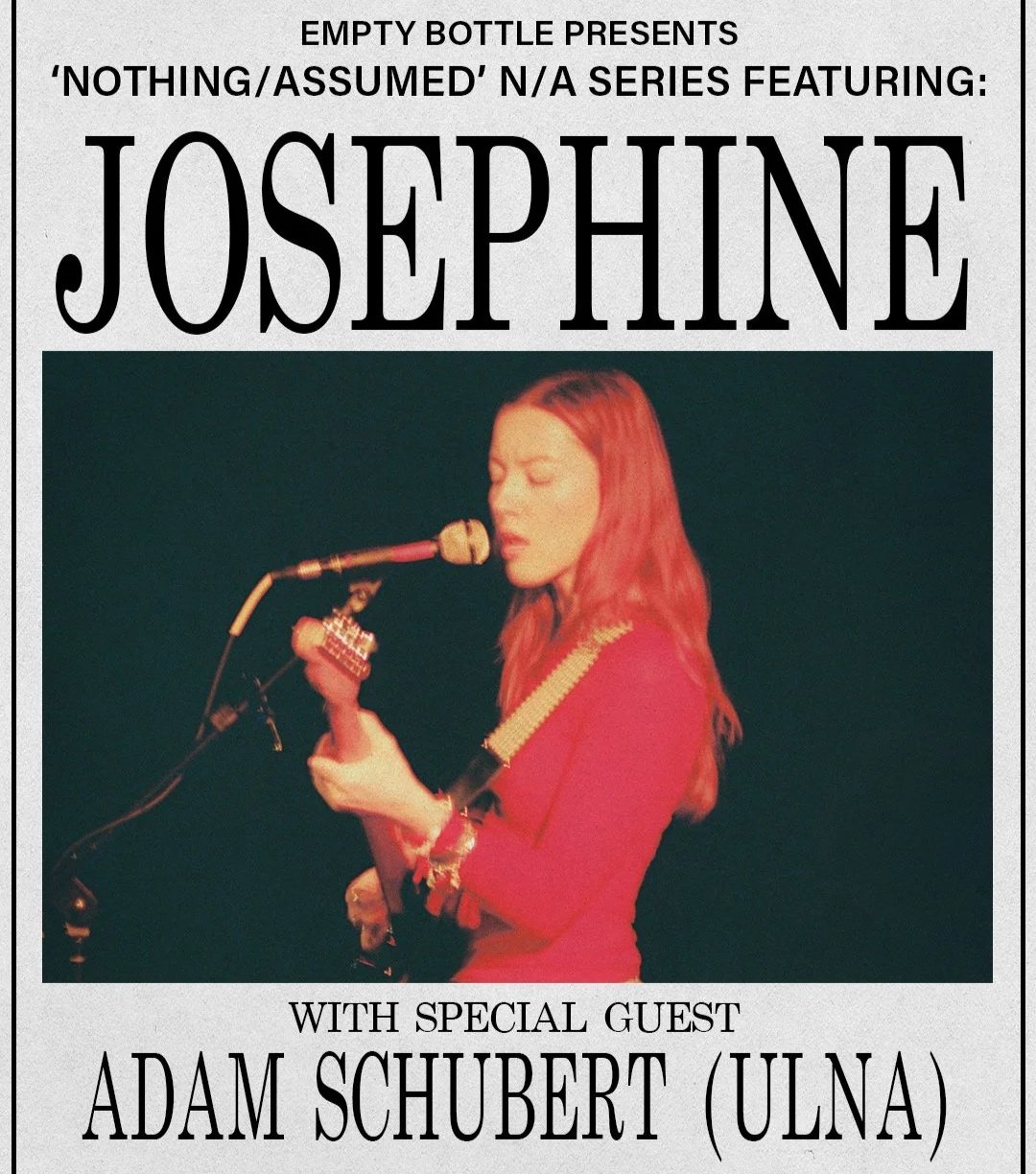
Come on out to the show!!
Tuesday March 3rd 2026
7pm // doors
8pm // show